
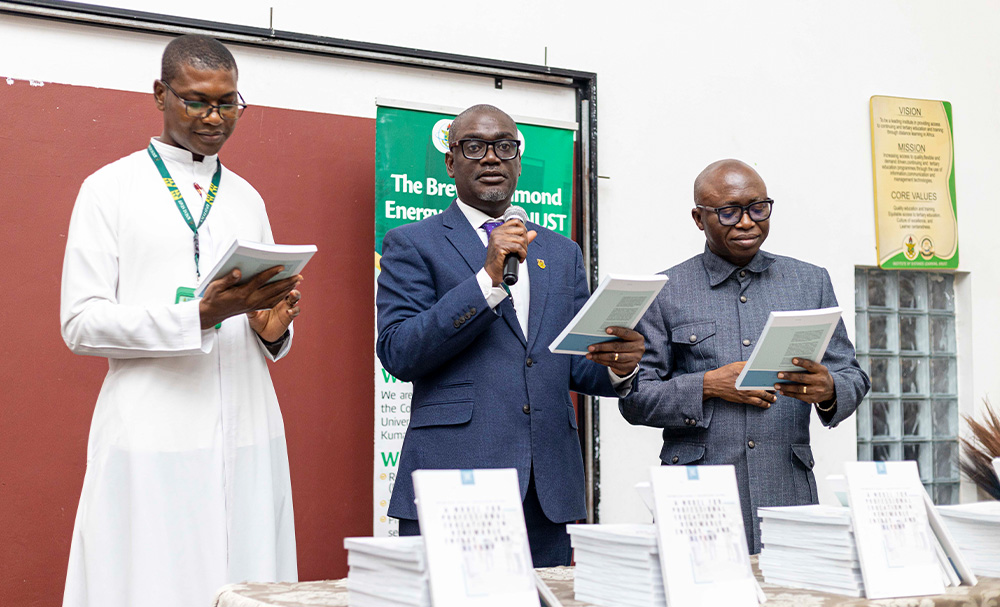
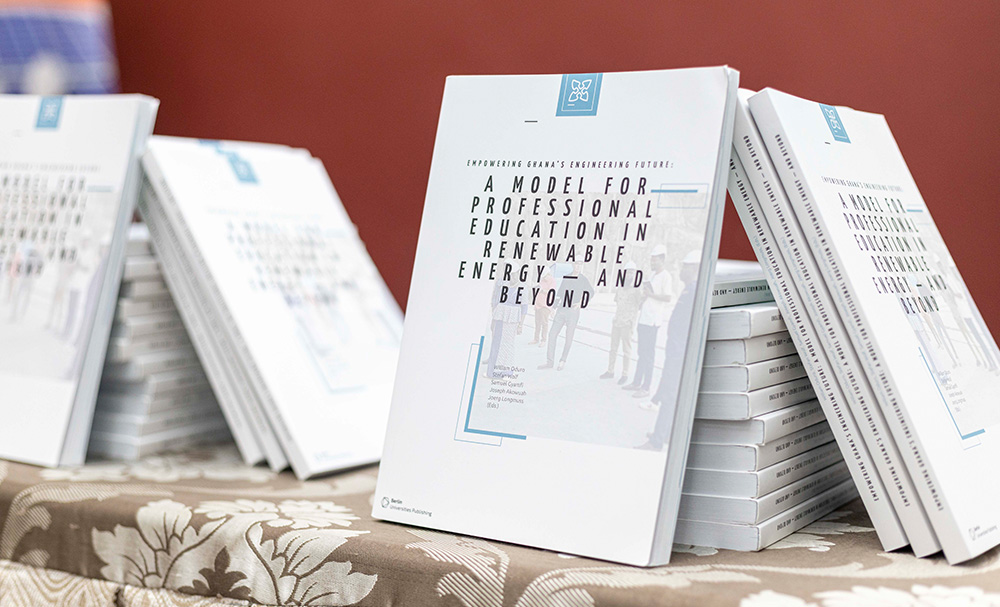
The Professional Education for Renewable Energy in Ghana Project (ProREG) under the Brew-Hammond Energy Centre at the Kwame Nkrumah University of Science and Technology (KNUST) has launched a book titled “A Model for Professional Education in Renewable Energy – and Beyond,” positioning it as a strategic framework for building Ghana’s human capital in the renewable energy sector.
The publication, authored by Professor William Oduro, Stefan Wolf, Professor Samuel Gyamfi, Professor Joseph Akowuah and Joerg Longmuss, documents years of collaboration between academia, industry and international partners aimed at strengthening professional training for the energy transition.
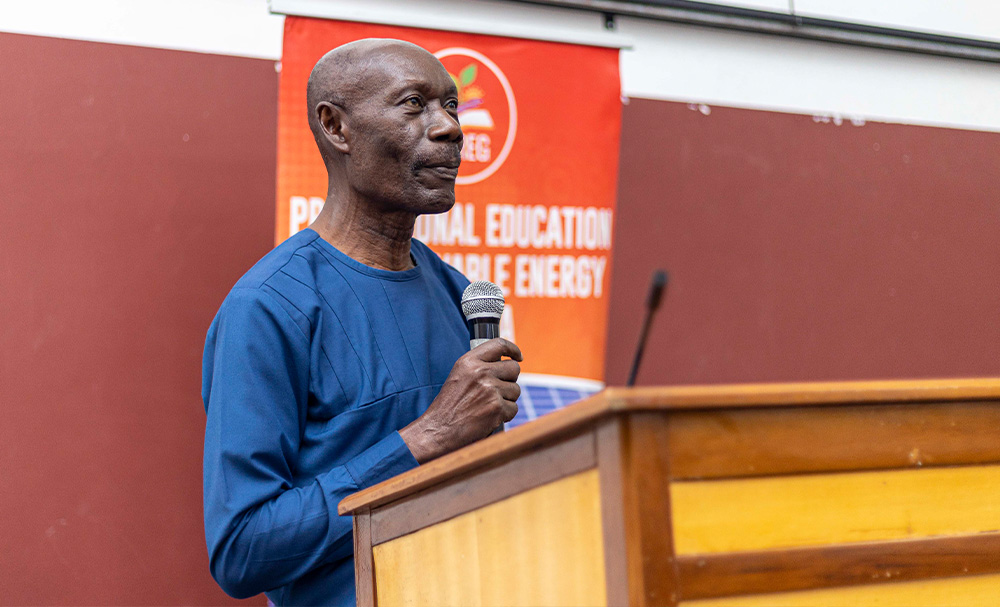
Explaining the project’s context and rationale, Professor William Oduro described the book as “a strategic blueprint for strengthening Ghana’s human capital in renewable energy.”
He said addressing the energy challenge requires more than infrastructure investment. According to him, the project was implemented through a structured partnership involving KNUST, Technische Universität Berlin, renewable energy industry partners and the German Academic Exchange Service (DAAD), blending academic rigour with applied industry experience.
He noted that the initiative introduced practice-oriented teaching approaches, strengthened university–industry collaboration and embedded sustainability and systems thinking into training, while continuously refining interventions within Ghana’s policy framework.
He added that the book is a structured knowledge product that offers universities a tested model, provides policymakers with reform insights and presents industry with a practical engagement framework.
Delivering the keynote address, Ing. Seth Mahu, Director of Renewable Energy and Green Transition at the Ministry of Energy and Green Transition, described the launch as timely and aligned with the Sustainable Development Goals and the global energy transition agenda.
Turning to Ghana’s progress, he said the country currently has 280 megawatts of installed renewable energy capacity, with more than 400 megawatts under construction, and has recently secured Cabinet approval to procure 200 megawatts of solar power with battery storage. He also outlined plans to scale mini-grids from eight to 400 by 2030 to achieve universal electricity access.
Mr Mahu expressed hope that the publication would guide Ghana’s clean energy future.
“This book should serve as a blueprint for Ghana’s energy transition,” he said, adding that it reflects “a global partnership that has laid out scalability roadmaps and championed Ghana’s green energy transition model for the Global South.”
He assured that the Ministry stands ready to collaborate with academia to facilitate internships and strengthen industry linkages.
“We must build bridges that place renewable energy students in industrial internships and apprenticeships. The Ministry of Energy will be more than glad to foster collaboration with you to be able to get students placed in industries under our ministry to have the needed capacity to move on in life,” he said.
The launch also featured industry perspectives from Maxmillan Kwarteng of the Bui Power Authority, reflections from the Ghana Institution of Engineering and the Energy Commission of Ghana, and institutional insights from Professor Elvis Asare-Bediako, Vice-Chancellor of the University of Energy and Renewable Resources (UENR), and Professor David Ato Quansah, Director of the Brew-Hammond Energy Centre.
The book was officially unveiled by Professor Kwabena Biritwum Nyarko, Provost of the College of Engineering, together with Professor Asare-Bediako and Reverend Father Dr Anthony Naah, Catholic Chaplain of KNUST.


